
Previous in series: Financialization Destroyed Crypto’s Chance to be a Positive Force
Next in series: An Insider’s View of How Crypto is Paralyzed by its Tokens
In my last article, I talked about the market-distorting force of financialization, transforming businesses from tools to benefit society into fungible assets to be traded, leveraged, flipped, and liquidated. Financialization has encouraged some of the worst of today’s finance industry behavior. Crypto and blockchain technology, attempting to build around the problems of traditional finance, has sadly (and a bit ironically) been driven enthusiastically down the same ugly road by its own self-financialization by design.
Paul Graham just published an essay called The Brand Age that describes another market-distorting force. This one acts on the products we buy, and the companies that make them, transforming products that solve problems into fungible brands that can extract more from buyers with less.
This brand-driven process often goes hand-in-hand with financialization, creating a self-reinforcing loop that captures and financializes companies and markets. Later I’ll come back to how that combination of forces hit crypto even harder, actively preventing it from realizing its potential for good. But first I want to talk about Paul Graham’s insight about brands and how it can throw fuel onto the fire of financialization.
Brandification Through Price
Graham’s main point is this: When the features and performance of a given product type commoditizes – that is, when anyone can buy something perfectly good enough cheaply and easily – the way back to profitability is no longer selling features and performance but selling brand. Companies must convince their buyer to spend more on the product not because the product itself is better, but because the product effectively delivers a recognizable and unique brand that the buyer prefers and values. Once companies in a fully commoditized market have started remaking themselves and their products in this way, every product in the market must find and sell its valued brand position or die.
For the sake of grammatical simplicity, I’m going to call this process brandification.
Graham’s example is wristwatches, a market that began to brandify when Seiko introduced wristwatches with quartz movements in 1969. Seiko’s watches without delicate, hand-made gears and springs rapidly made accuracy and thinness cheap and mass-manufacturable rather than the exclusive domain of precision Swiss mechanical watchmaking. The only way for Swiss watchmakers to survive the cheap quartz watch was to create the brandified luxury watch category. Now, decades later, more expensive watches now largely justify their price through what their luxury brand gives you rather than what the product itself gives you.
There are many ways that products successfully brandify and charge a premium beyond what’s justified by strict functionality. The goal is to create a brand that gives the buyer something outside the functional features of the product. To do that, a successful brand must convey values that are compelling to the buyer, whether design (tasteful, classic, streetstyle...), lifestyle vibe fit (active, quiet luxury, tech-forward...), or ironically even notable lack of traditional brand marks. By choosing a particular brand, you may even earn membership to a community of like-minded owners.
I want to focus, however, on the brand value many Swiss watch companies embraced with success: being recognizably expensive to display wealth. They learned they could charge vastly more than Seiko’s cheap and accurate quartz watches by selling the price itself. This meant telling a brand story that their watches were very difficult and expensive to make, and thus were distinctly expensive to buy. Their advertising began to explicitly link their brand to high price, making their products effective ways of displaying wealth, performance comparisons to quartz watches be damned.
Making price itself the primary selling point created a strange new dynamic for these companies. Not only did the product’s marketing need to focus explicitly on high price, it became crucial to ensure that the price of watches remained high, even in the secondary market, lest the brand story of “expensive because it’s worth it” fall apart. As Graham describes, Patek Philippe began strictly limiting production of its top-end watches, setting rules for retail that made them difficult to buy, and putting restrictions on their resale. They even began buying their own watches from the secondary market to ensure that the most expensive Patek models remained expensive.
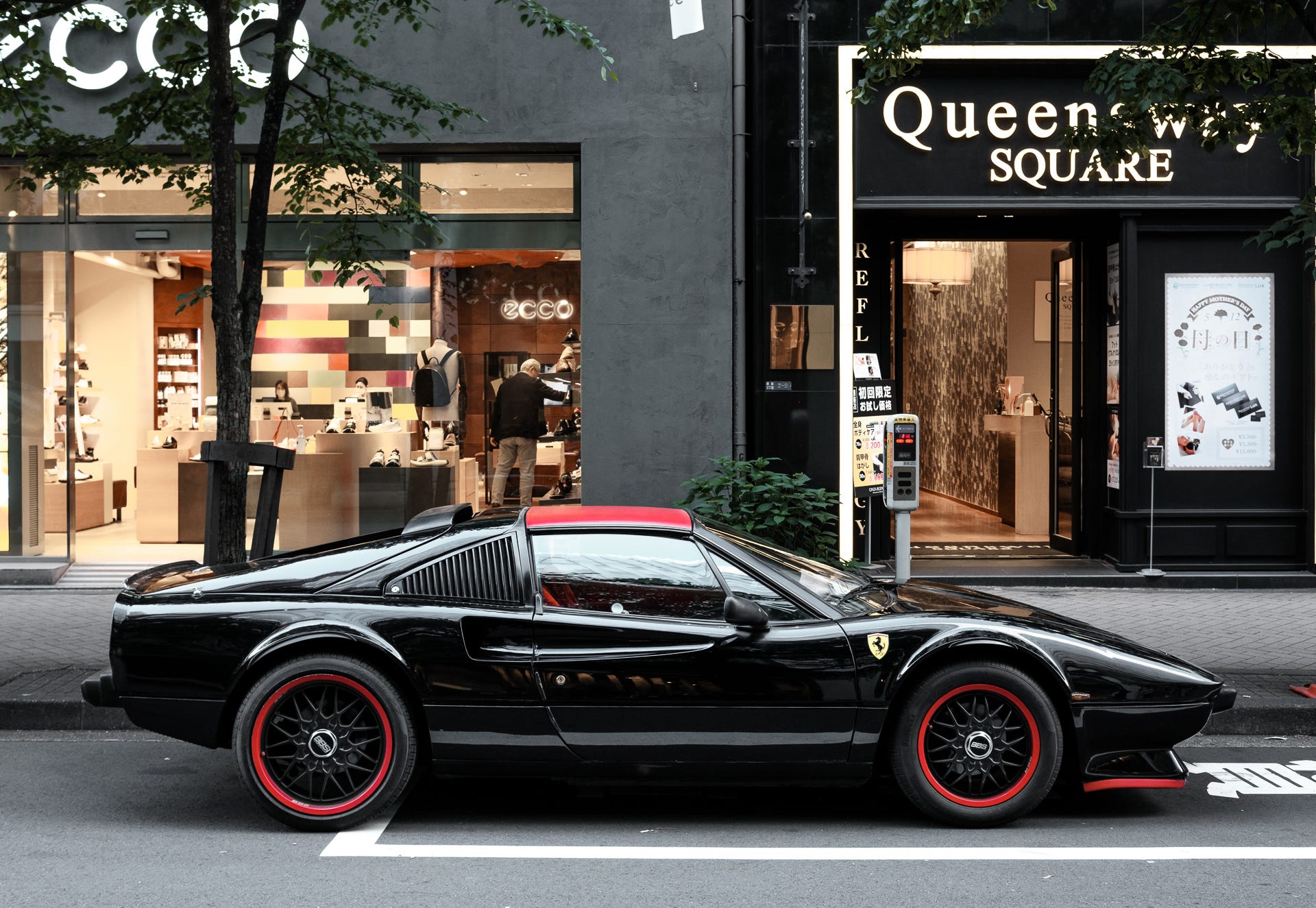
This doesn’t just happen with luxury watches. Ferrari does very similar things, only offering their top-end cars to long-time Ferrari owners and imposing contractual terms on how those cars may be used and resold, including a requirement to offer Ferrari the chance to repurchase it itself. Violating Ferrari’s terms means Ferrari will no longer sell you a car. Even now when an affordable EV may be as fast as a Ferrari, Ferrari remains successful in large part because it is selling the exclusive Ferrari brand. Certainly some of that brand’s value has to do with design, lifestyle, and racing history. But a big part of it is also the fact that expensive Ferraris stay expensive.
That’s an important shift to dig into further.
When Brandified Products Financialize
Brandification based on price may be just one of many ways to stay competitive, but it’s a particularly insidious one because it changes the nature of the product and the company that sells it.
Brand buyers expect the brand’s values to be maintained. So when the price is the product to most of a product’s buyers, they expect that price to be maintained. As we’ve seen with Patek and Ferrari, that means not just setting the sale price high, but engaging in careful market engineering – controlling supply as well as “structuring” the behavior of the primary and secondary markets. The product very literally becomes a financial asset that the company issues and supports, and the company must diligently treat it that way to remain successful.
Patek Philippe and Ferrari didn’t just brandify their products, they also financialized them.
Like any well-engineered financial asset, why stop at just slowing the slide of its price? Patek and Ferrari are so successful at financializing their products that their price in the secondary market often increases. Purchasing those products not only gives the buyer an effective display of wealth and an automatic membership to an exclusive-by-design community of owners, it gives them a speculative investment. Quite a bargain. And as you’d expect for such an investment asset, high-end Pateks and Ferraris are frequently bought and stored for later resale with the confidence that the manufacturer’s financial engineering will keep that market predictably profitable.
Once a market has brandified and financialized, it’s particularly difficult for it to go back to being performance-value-driven.
Play out the attempted break-out scenario: You create a company trying to enter a brandified, financialized market with a product that breaks through commodification with legitimately greater functional value that nobody thought possible before. In a normal market, you’re in good shape to have a strong pitch to investors and an attractive value proposition to buyers. In the brandified and financialized market, however, you are at an immediate disadvantage.
For buyers, not only are you fighting against entrenched brand-centric mindshare (”Who are these guys? Why should I care? What sort of people own those products?”), they are comparing your premium product against more exclusive competitors that hold or increase their value over time through market engineering. That’s tough to beat.
You’ve also got a tough pitch to potential investors. Building a better product is expensive, time-consuming, risky, and requires careful product judgment. To succeed, your company must diligently find and validate a product opportunity with customer value and usability, technical feasibility, and business viability – and then go do the hiring and hard work of execution. (And if you think AI eliminates all that, you’re the victim of the hype flowing out of today’s highly brandified generative AI market. But that’s a story for another day.)
Your investors are comparing all that expense, risk, and time-to-ROI to brandified, financialized companies. Those companies only need products that are roughly as good as the others – no R&D risk or expense to speak of. All the competitive juice is created with the tools that financial people understand: brand marketing and financial engineering. Those tools are quick, measurable, generate near-term profit, and the cost outlay doesn’t come with any long-term commitments to large engineering staff so the taps can be quickly turned on or off to tune the finances. And once the brand juice runs out, they cut costs, flip the company, and move on.
In the brandified, financialized market, maybe you can break through as a startup insurgent and compete with your better product, but it’s a very hard road. Good luck.
Financial Assets Become Brandified
We’ve seen how brandified products sometimes naturally financialize to compete, and tend to stay brandified and financialized. We can also see the causality go the other direction: Financial asset classes often naturally become brandified “products” to compete against other assets for investment.
For example, what is gold in the modern world but a very strong brand? The price of gold vastly outstrips what is justified by scarcity or function (compare it to platinum or silver) because gold has become the #1 brand in precious metals. It’s the Coca-Cola of wealth preservation assets and it maintains its price because the price is the product.
That brandification of financial assets multiplies the ugly market dynamics of financialization, suppressing sustained innovation and creating speculative bubbles. That’s because when the price is driven primarily by brand value, and the brand value is the increasing price, trading of the asset is inherently reflexive.
The dot-com boom was fueled by easy IPO cash available to companies who made “putting X on the internet” their brand. The functionality offered by internet-based products for users (or lack thereof in the late 90s) didn’t matter to investors when the brand value of internet companies was simply the anticipated massive price increases of their stocks in an overhyped market.
In the lead-up to the 2008 financial crisis, real estate was bundled into abstracted, financialized “AAA-rated” assets that obscured the functional risks of rampant subprime lending. Finance industry buyers of those assets weren’t digging into the underlying soundness of those assets (or lack thereof) because the AAA-rated asset brand, and its attractive returns, was the product. Everybody was getting in on this hot investment asset brand and nobody in the financial world wanted to miss out.
Or there’s Bernie Madoff, his investment fund offering a money-making-miracle brand that everybody wanted in on. Nobody cared about the source of the extraordinary returns (or lack thereof).
But brand-driven value is fragile and reflexive assets tend to violently correct. Eventually it became impossible to ignore that internet companies weren’t making money, that AAA-rated real estate bundles were full of defaulting loans, and that Madoff was running a ponzi that couldn’t pay off. The brand value of the assets was destroyed as soon as the illusion could no longer be maintained, and so the assets themselves collapsed. It was as if we discovered that Patek Phillippe was secretly selling 100 times more watches than they claimed. The price would collapse, because the brand’s value is the successful maintenance of the market engineering supporting the price.
I’ll leave it to others to push for the right regulation to avoid dangerous brandification of investment assets. But in the next article, I’ll get into the link between the brandified/financialized dynamic and crypto, and what it means for crypto’s inability to reach its potential for good.
Agreed, I'd like to say I've got answers that come out of the analysis. I have at least some starting thoughts that I may put into a future article. But I think one key problem to solve at the tech/business level (which I'll touch on a bit in my next article for sure) is that we need to get "the token" out of the operation and funding of crypto platforms. That alone has a lot of very difficult implications, but I think it's unavoidably necessary to avoid the financialiation/brandification trap.
Totally agree Matt. 100%
But once we have done the analysis I wonder what can we do to create a change on this area?
What can be implemented? What systems should be build? How do people learn to see it? How do we encourage that world to be?
Your thoughts always gives me more questions and the desire to build those systems.
So more than happy to discuss how to build it and begin to build them ;).